
Understanding the Significance of V Engines in High-Performance Vehicles
By Kranthi Kumar
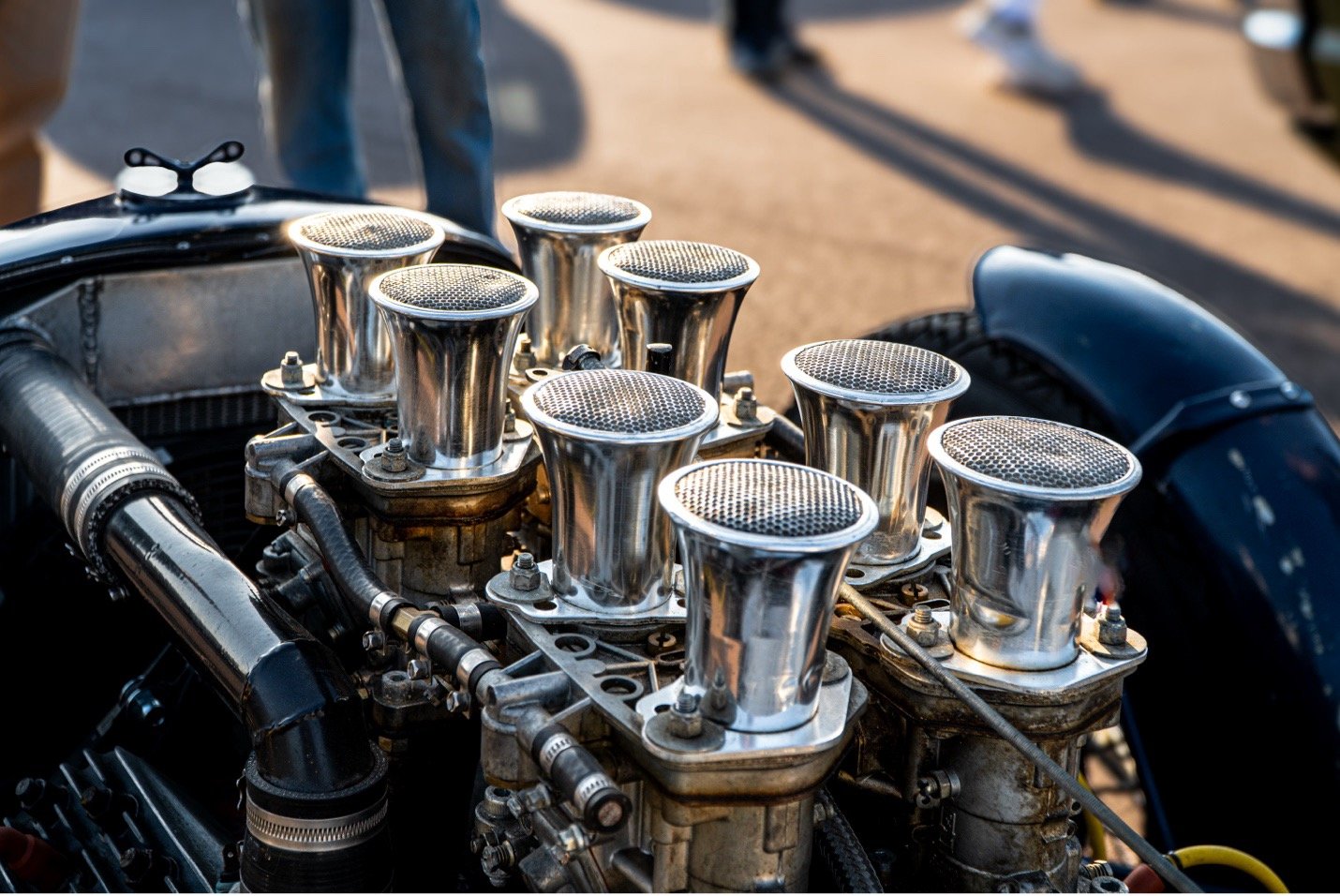
Why the Capital V Still Commands a Crowd
Press the start button and the same small drama plays out: a cough, a burst of noise, and then a steady idle. Even as the car industry shifts toward electricity, V-engines still know how to set the mood. At its core, a V-engine is simply two rows of cylinders sharing a crankshaft and set at an angle to form a “V” shape, yet it has long been treated as the star of the automotive stage. Some call it outdated and ready for retirement, while others see it as a showcase of engineering craft worth preserving. As a student reporter, my goal is to explore what makes V-engines matter not just how they work, but how they feel, why they cost what they do, how they appear in culture, and how the media, me included, portray them. When I talk about their “significance,” I mean far more than raw power or lap times. I’m talking about the entire picture: the technical reasons for choosing the layout, the way it sounds and responds, the social impact it carries in terms of jobs, noise, and emissions, and the way stories in the media shape public perception. In short, significance is the point where physics meets feeling and turns into a story people can connect with.
What “Significance” Means (and Why It Isn’t Just Lap Times)
When something is significant, it matters in more than one dimension. For V-engines, that significance comes from a combination of technical relevance, experience, social consequence, and editorial weight. Technical relevance asks whether the V-layout genuinely improves a car’s performance-keeping the engine short, low, and stiff, managing vibration and heat in ways that suit the job. Experience is about the sensations it creates, from the throb at idle to the smoothness or urgency at speed, shaping the car’s character for drivers and even bystanders. Social consequence considers the balance between the benefits, such as skilled jobs and specialist expertise, and the drawbacks, like emissions and noise. Editorial weight reflects how much attention journalists give to the V and the tone they take, because media coverage plays a huge role in sustaining its legend.
Testing that significance is as simple as asking plain questions. Is the car genuinely better because the engine is short and low, allowing for a lower bonnet and better weight distribution, or could another layout do the job more cheaply and cleanly? Could a passenger with their eyes closed guess whether it’s a V8 or a V12 from the way it idles and revs? Do laws and regulations aim to manage V-engines rather than ban them outright because they are still valued? Are headlines, images, and sound clips giving the V more attention than other parts of the car?
Technical relevance shows itself in packaging, balance, and heat management. Two-cylinder banks on one crankshaft keep the engine short, which helps with bonnet height, aerodynamics, and interior space. Some bank anglers are smoother than others: a 60-degree V6 tends to run more calmly than a 90-degree one. Cross-plane V8s have a relaxed, loping rumble, while flat-plane V8s rev quickly and feel more urgent but can bring extra vibration. “Hot V” turbo designs place the turbos in the valley for faster response, but this generates a lot of heat, making coolant flow, shielding, and after-run pumps essential. If a car can idle in traffic on a hot day without suffering or fade after repeated hard runs, that’s engineering working as it should.
Experience is easier to explain. Cross-plane V8s produce bass you can feel through the seat rails, flat-plane V8s sing with a lighter, sharper tone, V10s sound crisp and metallic, and V12s blend into a smooth, swelling note like an organ pipe. These sounds are not decoration; they give drivers clearer throttle feedback and build confidence. Memory plays a part too-many car lovers first fell for the hobby because of a sound they heard from a trackside fence or in a video. The high prices commanded by “last of the line” V-engines show just how much that memory matters.
Social consequences are more complicated. V-engines sustain skilled work in foundries, machine shops, and race teams, but they also cause cold-start emissions spikes and can be noisy. Modern technology-like gasoline particulate filters, quiet-start modes, cylinder deactivation, and hybrid systems-reduces those issues, which is why most laws regulate rather than ban them outright. This balance is part of how society decides their value.
Finally, editorial weight completes the picture. The V became a central character because magazines, television, and online media made it one, using scarcity headlines, heritage montages, and tunnel run videos to feed the legend. As writers, we should enjoy the romance but also present the receipts: where and how the sound was recorded, what mode the car was in, and what compromises were involved. When Ferrari launched the 812, most coverage treated its naturally aspirated V12 as a farewell tour, but the best stories also explained the engineering-combustion tuning, catalysts, gearing-that kept it road legal. When AMG moved a flagship from a V8 to a hybrid four, opinion split; when another model retained a hot-V V8 alongside hybrid tech, fans felt the brand had “found its sound” again. In each case, significance was as much about brand storytelling as mechanical design.
For a student journalist like me, the takeaway is simple: before filing a story, make sure the engineering is explained clearly, the experience is described without exaggeration, the social costs and fixes are included, and the language avoids repeating myths. If those boxes are ticked, the story is doing its job.
Configurations with Character - and the Models That Made Them Famous
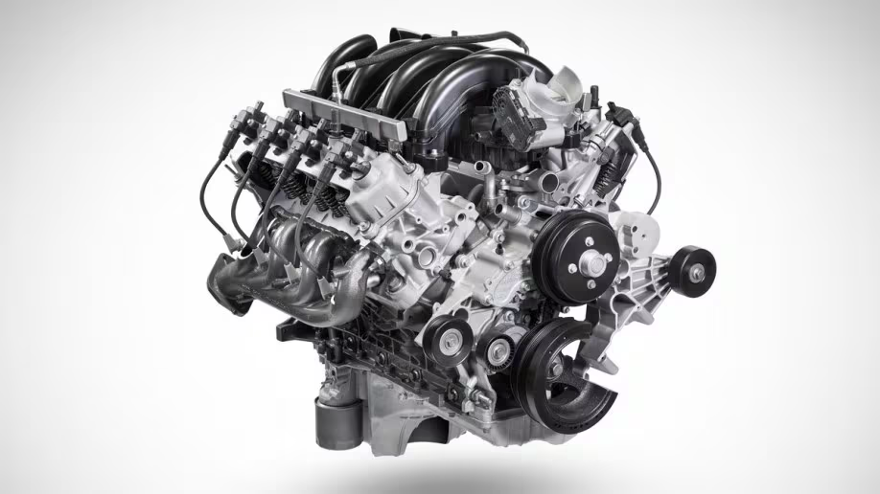
Different V layouts carry their own personalities, and the V6 is often the all-rounder. Many are set at a 60-degree angle for smooth running, while some use a 90-degree bank to share components with a V8. Alfa Romeo’s 2.9-litre twin-turbo in the Giulia Quadrifoglio developed with Ferrari input gives a family saloon a race-car edge. “It’s like bringing a scalpel to a gunfight,” says racer Luca De Marchi. “You don’t just win; you win with precision.” Nissan’s VR38 in the R35 GT-R, hand-finished and turbocharged, showed just how far careful cooling and meticulous calibration could go; as De Marchi puts it, “You can push lap after lap, and it just shrugs it off.” Ford’s 3.5-litre EcoBoost V6 was initially mocked for its sound but earned respect in both the GT race car and the Raptor by proving that results matter more than tone. Maserati’s Nettuno V6 borrows pre-chamber ignition technology from Formula One, making a smaller engine feel like something far larger. Even Volkswagen’s narrow-angle VR6, not a classic V in the strictest sense, carved its own niche; its tight bank angle let six cylinders fit in spaces built for four, and its distinctive intake note gave ordinary cars a special edge. “The VR6 had this growl that made the school run feel like warm-up laps,” De Marchi recalls with a grin.
The V8 has long been the benchmark, offering a blend of power, balance, and sound that few other configurations can match. A 90-degree V8 can be built with a cross-plane crank to deliver that deep, rolling rumble, or with a flat-plane crank for a sharper, faster-revving character. Chevrolet’s legendary small-block family has evolved into today’s LT engines, with the Z06’s LT6 showing just how far a flat-plane design can be pushed in a road car. “It’s like strapping yourself to a chainsaw that sings,” says Luca De Marchi. Ferrari’s V8 lineage stretches from the naturally aspirated F136 to today’s twin-turbocharged units, proving how a brand can treat a V8 as both an instrument and a weapon. Mercedes-AMG’s hot-V twin-turbo engines turned the “63” badge into its own language; as De Marchi jokes, “When it spools up, it’s like a punchline you never get tired of hearing.” Ford’s 5.0-litre Coyote modernised a legend with clever cam profiles and intake tuning, while Jaguar’s supercharged V8 quietly powered a generation of luxury performance cars with a mix of elegance and ferocity.
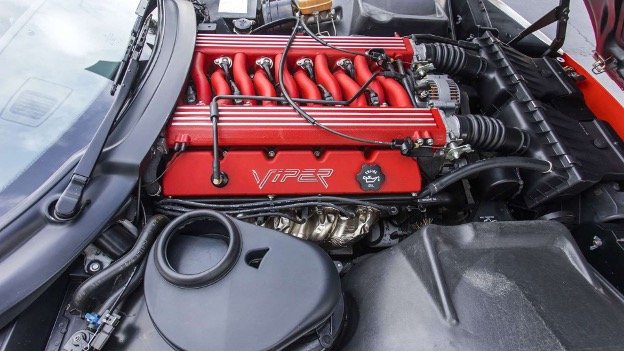
The V10 is a rarer sight on the road, but when it appears, it’s impossible to forget. Audi and Lamborghini’s shared 5.2-litre engine gave two very different brands a single, unmistakable soundtrack. “It’s like it screams in Italian even if you’re in an Audi,” says Luca De Marchi. BMW’s S85 V10, found in the E60 M5, used individual throttle bodies and a sky-high redline to transform a practical family saloon into something that felt like a touring car. Then there’s the Lexus LFA, whose V10 remains legendary because its engineers tuned the sound with as much care as the power delivery. “The LFA didn’t just rev it tore holes in the air,” De Marchi recalls, his expression somewhere between awe and disbelief.
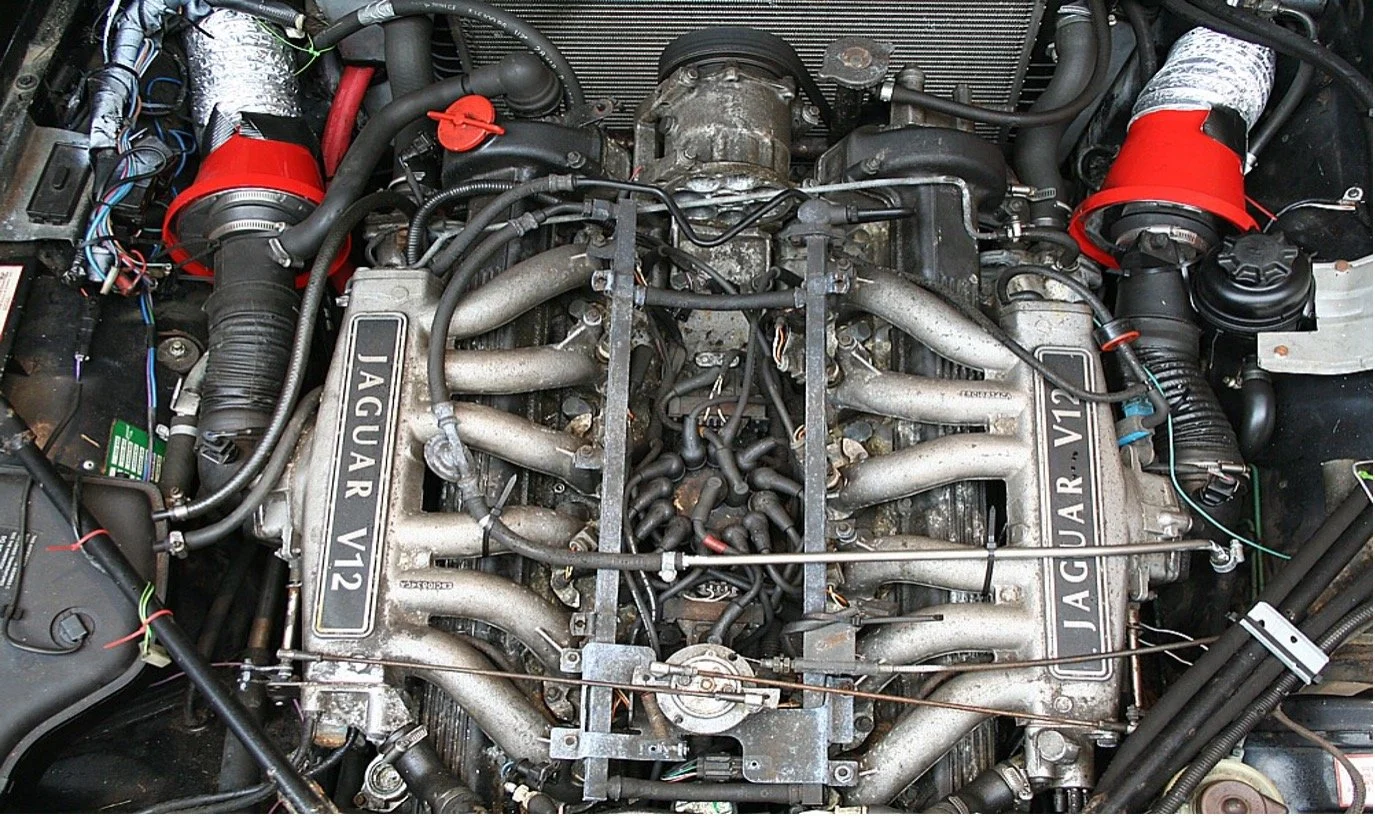
The V12 sits at the very top of the hierarchy, reserved for cars that aim to deliver the most drama or the most refinement. Ferrari’s F140 series, from the Enzo to the 812, shows how a high-revving twelve can feel like one long, unbroken breath. Lamborghini’s V12s are loud, theatrical, and unapologetically extravagant. “You don’t drive it you conduct it,” says Luca De Marchi. Aston Martin’s 5.2-litre twin-turbo V12 blends old-school character with modern packaging, while Rolls-Royce uses a BMW-derived twelve for the opposite effect: absolute calm and effortless torque. “It’s the only engine that makes you forget you’re moving,” De Marchi remarks. Part of their magic lies in how these engines fire. Cross-plane V8s deliver a heavy, loping bass, while flat-plane V8s sound brighter and build revs with motorcycle-like urgency. V10s carry a sharp, metallic edge, and V12s smooth everything into one seamless, rising note. These aren’t just party tricks they’re a central reason why people form such deep emotional attachments to these cars
Packaging: Where Character Is Set (and Headaches Begin)
By nature, a V is short from front to back and sits low in the chassis, which helps lower the centre of gravity and allows designers to draw a sleeker, lower bonnet. That’s great for handling and aesthetics, but the challenges start when you look sideways. Two-cylinder heads mean twice the cams, chains, and valves. The exhausts must either run down under the floor to the catalytic converters or turn inward toward turbos in the valley on hot-V engines. That valley is a cramped, scorching space where every pipe, shield, and sensor must survive brutal heat over years of use.
Heat is the first and fiercest enemy. Coolant often must run dangerously close to exhaust areas, and some valves are even sodium-filled so they can endure extreme temperatures. Airflow under the bonnet needs to carry heat away while idling in traffic yet avoid pulling in water at speed during heavy rain. Heat shields must stay effective without rattling as the car ages. The second major challenge is asymmetry alternators, air-conditioning compressors, and pumps all must be arranged around the opposing banks, which can make belt routing and mounting unnecessarily complex. Dry-sump oil systems can drop the engine even lower by removing the deep oil pan, but they add pumps, a separate tank, and plumbing that must be crash-protected without piling on weight.
Get the packaging right and you have a car with a low nose, sharp responses, and a strong sense of occasion. Get it wrong and you end up with heat-soak issues, persistent rattles, and service times that make mechanics wince. The unique sound and feel people associate with V-engines are, in many ways, just the by-products of deeply considered choices about firing order, crankshaft design, and rotating mass.
Why the V Is Costly (and Why That Cost Isn’t Just Margin)
With a V-engine, parts multiply quickly-and with a V12, the scale becomes staggering. Twelve injectors and twelve coils feed four camshafts, while long timing chains, threaded with multiple guides and tensioners, link everything together. The crankshaft demands heroic balancing to run smoothly. “You’re not just building an engine,” says Luca De Marchi, “you’re building a mechanical orchestra-and every player has to be in tune.” Emissions equipment doubles up too: twin sets of catalytic converters, oxygen sensors, and, in the case of direct-injection engines, gasoline particulate filters sized to handle huge volumes of exhaust flow.
The costs climb with the materials and machining required. Aluminum blocks with cast-in liners or plasma-sprayed bores need specialised, expensive equipment, while split main bearing caps call for precision metrology. Low-volume production especially for V10s and V12s-means development costs are spread across far fewer units. “You can’t hide in big numbers,” De Marchi notes. “Every part is bespoke; every mistake is expensive.” Testing and validation add further expense: endurance dyno runs, desert hot-fuel trials, cold-room starts, towing simulations, and NVH campaigns to perfect the sound while eliminating buzzes and rattles. Even warranty modelling becomes a high-stakes exercise-one failure in the field on a V12 can cost more than ten on a three-cylinder commuter engine. It’s little wonder the final invoice reads more like haute horlogerie than mass manufacturing.
Owning One: Maintenance Realities (Not Myths)
Living with a V-engine can be straightforward if the car was designed with maintenance in mind, but many weren’t. Two-cylinder banks often mean twice the spark plugs and coils, which doubles the labour. In hot-V turbo engines, coil packs can be buried deep in the valley right where heat is most intense. Some V6s and V8s hide the water pump under a timing cover, turning what should be a simple job into a major teardown. Direct-injection designs can allow carbon to build up on the backs of intake valves, forcing owners to either blast it away with walnut shells or rely on dual-injection systems that also use port fuel to keep them clean. Oil capacity is greater, the correct grade is critical, and the filters are larger. Heat takes its toll on plastic components, making breather pipes and small coolant fittings brittle and prone to vacuum leaks that are frustrating to track down. Dry-sump systems demand careful bleeding after an oil change, and long, sustained corners on track can expose weaknesses in their scavenge stages. Short, low-temperature trips can cause condensation and fuel dilution in the oil.
Real-world examples drive the point home. Older belt-driven Ferrari V8s became notorious for “engine-out” services, while later chain-driven designs eased that burden but introduced their own checks for tensioners and cam cover seals. BMW’s S65 and S85 engines schooled owners on rod bearing wear and the benefits of preventative replacement with the right oil. Early AMG M156 V8s had known head-bolt and cam-bucket issues that were corrected in later builds. The Audi/Lamborghini 5.2-litre V10 is robust, but its single-clutch gearboxes can chew through clutches in heavy traffic. Even simple American pushrod V8s need the correct oil to avoid lifter wear, and stronger valve springs if they see track use. None of this is a reason to avoid owning a V; it’s simply a reminder that boring diligence proper warm-up, shorter service intervals, and quality parts pays off in the long run.
Formula One: The V’s Moving Target (and Why It Keeps Winning)
Formula One has long been the laboratory where engine reputations are forged, and while the configuration baton has passed from one layout to another over the decades, the V keeps finding its way back onto centre stage. Packaging efficiency, chassis stiffness, and crucially the rules themselves have often worked in its favour. In the 1950s, the grid sampled everything from inline sixes to V12s. The 1960s split into two distinct phases: during the 1.5-litre formula years, V8s became the default choice, and when the 3.0-litre rules arrived in 1966, they ushered in a new wave of V12s alongside the Ford Cosworth DFV V8—a design that not only powered countless victories but also doubled as a stressed chassis member, creating a dynasty.
Turbos took over in the late ’70s and early ’80s, with 1.5-litre straight-fours and V6s dominating. When turbos were banned in 1989, the sport reverted to naturally aspirated 3.5-litre engines, paving the way for glorious V10s while a few teams clung to V12s. From 1998 to 2005, the 3.0-litre V10 became the consensus favouritelight, rev-happy, and compact. The 2.4-litre V8 era that followed (2006–2013) produced an unforgettable 18,000rpm soundtrack. Since 2014, Formula One has run 1.6-litre turbo-hybrid V6s with energy recovery systems, and the 2026 ruleset will retain that V6 format while increasing electrical power, removing the MGU-H for simplicity and cost control, and preserving the aerodynamic packaging teams have spent years refining.
Why stick with a V at all?
Single-seater aerodynamics naturally favour a short, stiff engine, and the V layout fits that brief better than most alternatives. An inline-six is simply too long for modern wheelbase limits and aero maps, while W or X configurations are either too wide or too complex. Boxer engines, meanwhile, complicate the drivetrain layout and disrupt the centre-line aerodynamics teams rely on. The V strikes the best compromise between power density, rigidity, and the overall shape the rulebook effectively demands. Its structural strength is a major asset: the block can act as a stressed member, tying the gearbox to the chassis with minimal flex. That stiffness sharpens handling and allows engineers to fine-tune suspension geometry without having to compensate for drivetrain twist.
Packaging efficiency is another strong point. A shorter crankshaft reduces torsional vibration, which supports higher rev ceilings without resorting to exotic countermeasures. It also allows the gearbox to sit closer to the rear axle, improving weight distribution and shortening the driveshaft to cut rotational losses. The angled banks create natural routes for intake and exhaust plumbing-particularly valuable with modern hot-V turbocharging, which can shrink the engine bay and improve airflow to the rear wing. Cooling benefits too: the split banks allow radiators and intercoolers to be placed in symmetrical sidepods, reducing duct lengths and keeping airflow clean. The centre of gravity stays low-though not as low as with a flat engine-offering a sweet spot between stability and agility.
Regulations often reinforce the V’s dominance. Formula One’s current 1.6-litre turbo-hybrid era mandates a V6, but even without such rules, many teams would still choose a V for its stiffness, compactness, and adaptability to aerodynamic requirements. The same logic applies in endurance racing prototypes and GT cars, where the V’s proportions make the rest of the car easier to optimise.
Culture: From First Ads to Dawn Meets
From its earliest days, the V engine has been more than just a mechanical layout-it has been a cultural statement. In the first half of the 20th century, Cadillac’s advertising didn’t simply promote horsepower; it sold the idea that a smooth, refined V8 was a mark of progress, prestige, and even civilisation itself. Back then, the sound of the engine was as much about reassuring quietness as it was about power. By the muscle car era of the 1960s and ’70s, refinement gave way to theatre. The deep, syncopated burble of a cross-plane V8 at idle became the soundtrack of countless American suburbs. A cammed, slightly rough idle outside a diner wasn’t just noise-it was a calling card, a way of declaring your presence without leaving the parking lot.
In Europe, the V spoke with a different accent. Luxury grand tourers and supercars carried their power with more restraint, delivering performance through a smoother, silk-lined voice. An Aston Martin V12 purring outside a Monaco hotel sent a very different message from a supercharged Detroit coupe idling on Main Street, yet both stories revolved around the same central character-the engine itself. The sound, the feel, the aura all placed the driver and car within a social context that went far beyond mere performance figures.
Over time, tightening noise and emissions laws-and the maturing of the enthusiast community-reshaped the culture. Informal, chaotic street gatherings gave way to early-morning meets in business parks or industrial estates, where parking was orderly and behaviour closely monitored. Track days replaced late-night cruising as the socially acceptable outlet for mechanical noise at full volume. The V adapted, shifting from a constant street-corner presence to a more curated, event-based spectacle.
Then the digital age arrived, transforming how passion was shared. Platforms like Instagram, TikTok, and YouTube turned sound into a form of online currency. A perfectly timed tunnel fly-by could draw millions of views in days, influencing potential buyers half a world away. The V engine’s ability to tell a story at idle-without even moving-was perfect for short-form video. Ten seconds of a cold start, a quick throttle blip, or a resonant exhaust note was enough for algorithms to latch onto and broadcast far beyond the original moment.
Today, the V is as socially potent as ever, but its stage has shifted. It no longer needs to dominate the local diner or hotel forecourt; it can command attention from the screen in someone’s pocket, continents away. The theatre, the personality, and the stories remain the same-only the audience has grown larger, faster, and more connected.
A Compressed History of the V (and Why It Stuck)
The V-engine’s story stretches back more than a century. Léon Levavasseur patented a V-type design in 1902, and by the 1910s Cadillac was selling a production V8 that marketed refinement as much as performance. Lancia’s narrow-angle V4 showed the layout’s packaging ingenuity, while Packard, Hispano-Suiza, and later Rolls-Royce explored multi-cylinder smoothness as the ultimate luxury signature. After the war, the American V8 democratised power the 1955 Chevrolet small block found its way into everything from family sedans to Le Mans contenders. Europe wrote its own legends: high-revving Ferrari V12s under Colombo and Lampredi, and British V8s powering everything from dignified Rover saloons to wild TVR coupes. The 1970s brought emissions regulations and fuel crises that stifled ambition, but the 1990s revived it with multivalve heads and variable cam timing. The 2000s perfected direct injection, only for the 2010s to usher in downsizing and hybridisation. Through every shift in technology and taste, the V layout retained its special aura-twelve cylinders for operatic theatre, eight for raw muscle, and six for the clever, balanced middle ground.
How Media Framed the V - and What We Owe the Reader
The V engine became a star because the media made it a star and audiences never stopped loving the show. Early print advertising, especially from Cadillac, sold the V8 as a symbol of progress and refinement. Later, road-test magazines added performance numbers while keeping the flowery language intact. Television turned the sound itself into entertainment, and YouTube carried that forward with cold start clips and tunnel blasts. Today, short-form video rewards the loudest moments, ensuring the V remains front and centre simply because stories and clips keep putting it there. That history has created its own set of habits. Phrases like “last of the line” and “swan song” crop up constantly because scarcity sells, while “giant killer” headlines appear whenever a turbo V6
outperforms a big V8, even if tyres and aerodynamics did most of the work. Words like “hand-built,” “bespoke,” and “soul” often get used without explaining the technical reasons behind them. As students, we can preserve the drama but add context: if something is the last of its kind, we should say which rule changed; if we praise a car’s character, we should explain what shapes it—bank angle, crank type, firing order.
Launch events also shape coverage. Routes are chosen for scenery and sound, not for stop-start rush-hour reality. Hotels and flights are often covered by the brand or the outlet, and embargoes make every story land at the same time. None of this is inherently wrong, but it does mean we owe readers transparency: who paid for travel, what the weather and altitude were, whether exhaust valves were open for filming, and what tyres were fitted. These details help explain why a car looked, sounded, and felt the way it did. The best coverage blends sensation with simple, concrete data-recording drive-by and cabin sound levels, describing tone, noting if performance faded after repeated runs, explaining how a gasoline particulate filter regenerates, and mentioning temperatures, because a V that feels crisp at seven degrees may soften at thirty-two after heat soak. Far from killing the buzz, this kind of context makes a review more useful.
Short-form video thrives on shock value, which can lead to anti-social clips, but it’s possible to make fun, shareable content by being specific: valves closed versus open, cold start versus warm restart, stock exhaust versus aftermarket, track-day sound limits versus unrestricted running. The goal should be to train the eye and ear, not just trigger them. A few case studies show how better framing works. With the Lamborghini Revuelto, the strongest stories didn’t just cheer the survival of the V12; they explained the battery size, motor layout, brake feel, and the quiet mode designed to keep neighbours happy. With the Corvette Z06, good reporting unpacked why a flat-plane V8 sounds and behaves differently from a cross-plane, and detailed how the oiling and chain drive were engineered to cope. Coverage of BMW’s S85 V10 was at its best when it centred on owners and specialists discussing rod bearings, oil choice, and real-world running costs. The most honest Nissan GT-R stories tracked the car’s calibration improvements over the years rather than treating each update as a revolution.
Context also changes with geography. The US tolerates louder cars and celebrates long road trips; the UK and Europe face tighter cities, stricter noise limits, and track-day sound caps; Japan blends touge culture with a deep respect for mechanical etiquette. Naming these differences helps readers understand why the same car might be reviewed one way in Nevada and another in Nottingham. Working with carmakers is not the same as working for them-if they show you cutaway engines and dyno cells, ask questions with numbers: piston speed targets, oil scavenge rates in long corners, expected back-pressure at the end of a filter’s life. Check those answers with independent builders or race teams. If you’re shown a “prototype” exhaust in a tunnel, ask whether the production model will ship with that exact valve and catalyst setup.
Software, too, plays a bigger role than ever. Over-the-air updates can change cold-start behaviour, throttle maps, and even the timing of exhaust valve openings, so always note the software version you tested-readers may experience something different. Above all, we owe our audience four things: clarity about test conditions, a sense of proportion between joy and cost, curiosity about the technology keeping V-engines Road legal, and the courage to publish the bill alongside the smile.
Compliance and Survival: Keeping the V Legal in a Changing World
Regulation didn’t kill the V engine-it reshaped it. To meet Euro 6 standards and their US and Chinese counterparts, manufacturers have added gasoline particulate filters to most direct-injection petrol engines, increased catalyst volumes, and introduced quiet-start modes to pass drive-by noise limits. Cylinder deactivation now closes valves cleanly under light load, while software mapping tones down the dramatic cold-start flare to something a legal sound meter can forgive. Start–stop systems have become standard. Thermal management has matured too: cooled EGR systems lower combustion temperatures and reduce NOx emissions, multi-event injection strategies help control particulate formation, and variable-geometry oil pumps along with map-controlled thermostats cut parasitic losses without starving the engine during flat-out laps. The result isn’t complete innocence-these engines still emit-but it is a kind of adulthood, with measurable reductions that buy time while the wider vehicle fleet transitions to cleaner technology.
The Hybrid Remixes: Sharing Top Billing with Electrons
Pairing a V engine with electric motors changes both the numbers on paper and the sensations behind the wheel. Some manufacturers place an electric motor between the engine and gearbox, allowing for silent creeping in traffic, stronger launches, and smoother shifts. The trade-off is extra heat around the clutch area, which demands careful cooling. Others fit an electric axle at the opposite end of the car from the engine, creating all-wheel drive without the need for a long prop shaft. This setup enables clever torque vectoring but also complicates brake feel, as the car must blend motor regeneration with traditional hydraulic braking. Supercars take the concept further with multiple motors. Ferrari’s SF90, for instance, pairs a twin-turbo V8 with motors at both ends, while Lamborghini’s Revuelto keeps a V12 at its heart and uses electric assistance to smooth low-speed manoeuvres and hit harder out of corners. On track, hybrids add a new strategic layer for both driver and journalist: battery state of charge becomes a resource to manage, with harvesting points and deployment maps influencing the rhythm of a lap. The headline is simple-the V still gets its name in the credits, but now it shares top billing.
Why They’re Not Banned ?
If combustion engines emit pollutants, why not simply ban V engines outright? The answer lies in how policy is shaped and how society balances ideals with practical realities. Legislation is often a blunt tool, and governments rarely apply it with surgical precision to niche products. Low-volume, high-price cars the natural habitat for V6, V8, V10, and V12 engines make up only a tiny fraction of overall fleet emissions. In many markets, they account for less than one percent of annual registrations, meaning their contribution to national CO₂ and pollutant totals is negligible compared with the millions of mass-market hatchbacks, crossovers, and light commercial vehicles on the road.
Beyond the environmental math, there are economic and cultural factors. These engines are often built in specialised facilities employing highly skilled machinists, engineers, and designers whose livelihoods depend on that production. The cars themselves are heavily taxed through sales duties, import fees, and annual registration costs, generating government revenue that often dwarfs that of cheaper, higher-volume vehicles. In countries with strong automotive heritage, there’s also a political incentive to protect the prestige and export value of high-performance brands-especially when they act as global ambassadors for domestic engineering.
Lawmakers also carve out exemptions. Historic and classic cars are generally protected from modern emissions standards, as they’re driven infrequently and treated as cultural heritage. Special-purpose vehicles-armoured limousines, limited-run homologation models, engineering testbeds-can fall under looser frameworks. Motorsport enjoys its own regulatory sandbox, treated as both entertainment and a proving ground, with its own fuel and emissions rules. This space has historically allowed innovations like turbocharging, hybrid systems, and advanced fuels to develop before filtering down to road cars.
In cities, authorities tend to regulate usage rather than outlaw engine types entirely. Noise caps, idling limits, and low-emission or congestion zones typically target the oldest, dirtiest vehicles first. A modern V engine fitted with particulate filters, catalytic converters, hybrid assistance, and adaptive cylinder deactivation can be far cleaner in real-world tests than an older four-cylinder diesel without advanced after-treatment. That’s why bans focus on outdated technology, not cylinder count.
The overall direction of travel is still clear: the long arc is bending away from combustion toward electrification and alternative fuels. But the bend is gradual, designed to avoid an overnight collapse of industries, cultures, and symbols that still hold value. The V engine’s time may be running out, but the phase-out is measured-allowing it to share the stage with new powertrains until legislation, technology, and public appetite converge for its final curtain call.
Cultural Value and Technical Legacy
The V configuration is more than just an engine layout-it’s a curriculum in balance, vibration control, crank design, and combustion. It has bankrolled racing programmes, pushed advances in metallurgy, and given us the benchmark sounds by which all other engines are judged. Inline sixes are cherished for their silkiness, boxers for their rasp, and rotaries for their waspish whirl, but when journalists reach for pure drama, they almost always reach for a capital V. That doesn’t make the V morally superior-it means its acoustic identity is so strong it can eclipse cold performance figures on a chart. Its legacy is also social: the crackle of microphones at pit walls, the moment teenagers first fall in love with engineering through sound, and the shared memories in auction comment threads that read like fragments of an oral history.
Silicon in the Sump: Semiconductors Everywhere
Today’s V engines are as much computers as they are combustion machines, wrapped in aluminium and governed by multi-core ECUs that can map fuel and spark for each cylinder, adjusting in milliseconds based on knock readings from wide-band microphones. Piezo injectors open and close with the precision of a pianist’s fingers, while ion-sensing systems monitor combustion quality through the spark plugs themselves. Cam phasers shift timing in the blink of an eye, and variable valve lift systems juggle the needs of low-rpm torque with the airflow demands of high-rev power. In hybrid applications, the real revolution lies in power electronics: silicon-carbide inverters-and increasingly gallium nitride-reduce switching losses and heat, allowing for smaller cooling systems and higher sustained outputs. On the road, the benefits are clear: more power, better fuel economy, and cleaner emissions than a decade ago. But these advances also raise the bar for diagnostics and repair-sometimes a misfire is down to a software glitch, not a faulty coil-and they expose new vulnerabilities in the supply chain, as the recent chip shortages made painfully clear.
Industry Change at Speed
The past decade has transformed the automotive industry at a pace unseen for generations. Supply chains were rerouted under the combined pressures of the pandemic, shifting trade policies, and geopolitical uncertainty. Rare-earth sourcing strategies were rewritten as nations scrambled to secure the materials critical for electric motor production. Battery costs fell with economies of scale, only to rise again as raw material prices and energy costs surged. At the same time, the way cars reached customers changed: direct-to-consumer sales and digital product launches became the norm, bypassing the traditional dealership unveiling. Subscription-based features -nce touted as the next big revenue stream-tested consumer patience and reignited debates about ownership rights. Manufacturers tied carbon-neutrality pledges directly to product planning, reshaping engine lineups years in advance to meet future fleet targets.
In this shifting landscape, the V engine adapted by moving further upmarket, embracing hybridisation, and becoming increasingly rare. Its role evolved. No longer the default performance choice, it transformed into a halo product-an emblem of identity rather than a volume seller. In the showroom, it gives a brand the credibility to speak about passion and heritage; in the boardroom, it serves as a high-margin anchor that helps justify investment in more accessible models. For enthusiasts, it remains proof that progress and pleasure can coexist—that a cleaner future doesn’t have to silence every symbol of the past.
“Scream”: Why No Other Engines Quite Do It Like a V
Strictly speaking, saying “no other engine screams like a V” is a judgement-but it’s one grounded in technical reality. Firing intervals and cylinder counts shape an engine’s tone, while cross-plane and flat-plane crankshafts distribute harmonics in distinct ways. V10s and V12s cluster their firing pulses in the human ear’s sweet spot, creating a sound that feels both urgent and musical. Boxers tend to boom and rasp, inline-sixes hum with a steady smoothness, and rotaries deliver a high-pitched whirr. The V’s unique gift is its ability to deliver drama across the entire rev range-building tension, holding it, and releasing it in a way that speaks as much to the heart as to the stopwatch.
Beyond F1: Motorsports That Keep the Curriculum Alive
Outside the rarefied world of Formula One, V engines remain some of motorsport’s most valuable teachers. NASCAR is perhaps the purest ongoing laboratory for the pushrod V8-a configuration some dismiss as “old tech,” yet one capable of running at 9,000rpm for hours on end when every component, from valve springs to oil pumps, is perfected. The lessons here are in metallurgy, lubrication, and thermal control under relentless punishment-knowledge that still trickles down into street engines and aftermarket builds. In Australia’s Supercars Championship, the V8 finds a different classroom, powering large-capacity saloons in tight, wheel-to-wheel battles on street circuits and flowing permanent tracks. The focus shifts to torque delivery out of slow corners, keeping power manageable on narrow tyres, and surviving contact without mechanical failure-a masterclass in drivability and robustness.
In GT3 and GT4 racing, production-based V8s and V10s are stripped, tuned, and proven in the ultimate validation environment: endurance races that run 12 or 24 hours at near-flat-out pace. Cooling efficiency, fuel mapping, and the balance between outright speed and reliability are tested constantly. The Nürburgring 24 Hours, for example, is as much a torture test for a road-derived V engine as it is a competition. The new hybrid era in IMSA’s GTP class and the World Endurance Championship’s Hypercar category adds another dimension, pairing V6, V8, and even V12 engines with energy recovery systems. These cars break lap records while teaching engineers how to package and cool two very different propulsion systems within one chassis without compromise.
At the grassroots level, club racing, hillclimbs, and time-attack events remain a haven for V-powered creativity. LS- and Coyote-swapped builds come together in home garages, where problem-solving happens with a whiteboard, a phone full of parts suppliers, and a pizza box doubling as a rulebook. These events keep the mechanical accessibility of the V alive, showing that performance doesn’t have to be locked behind factory seals. Drag racing remains the most brutally simple yet technically demanding arena: from Top Fuel monsters producing over 10,000 horsepower to tightly regulated street classes, V8s are pushed to deliver everything in a matter of seconds. Here, fuel delivery, ignition timing, and traction control aren’t about endurance-they’re about controlled violence, where the gap between a record pass and catastrophic failure is measured in milliseconds.
Even beyond land-based competition, V engines remain practical teachers. Offshore powerboat racing subjects them to relentless pounding and saltwater cooling challenges, while air racing demands maximum power in thin air with razor-sharp throttle response. In each of these arenas, engineers gather fresh data on torque curves, cooling solutions, and failure points-lessons that continue to influence both motorsport and the high-performance road cars we drive.
Deep Engineering: The Bits You Can’t See
Crankshafts in V engines are more than just mechanical necessities-they’re precision sculptures of counterweights, journals, and fillets, each carefully shaped to counteract the secondary imbalances and torsional vibrations that, if ignored, could destroy bearings in minutes. In high-performance builds, the choice between a cross-plane and a flat-plane crank influences not just the sound and rev behaviour, but also how much counterweight mass is required-directly affecting how quickly the engine can spin. Harmonic dampers, whether viscous designs filled with silicone fluid or elastomeric units bonded with rubber, are tuned to absorb specific frequencies, protecting the crank nose and accessory drives from fatigue. Some V6 configurations, particularly those with 90-degree bank angles adapted from V8 architecture, require extra balance shafts to neutralise rocking forces that geometry alone can’t cancel.
Exhaust pulse timing is a discipline. Naturally aspirated V engines rely on equal-length headers to create predictable scavenging, where an outgoing exhaust pulse helps draw the next charge in. Turbocharged layouts add another challenge: preserving exhaust pulse energy for turbine efficiency while still packaging everything into a tight engine bay. Pulse-preserving manifolds can deliver quicker spool and sharper throttle response, but they consume precious space and create heat where it’s least welcome. Cooling brings its own hurdles. Rear cylinders often get less airflow-especially in mid- or rear-engine layouts-so coolant routing and flow balancing are critical. Engineers may stagger coolant entry points, add bleed lines to eliminate air pockets, or use split cooling circuits that prioritise either the block or the head depending on load. Modern map-controlled water pumps and electronically managed thermostats juggle competing demands: they must keep emissions low during cold starts by warming the engine quickly, yet still defend against heat soak during flat-out track sessions.
On the intake side, airboxes and runners act like Helmholtz resonators, shaping the harmonics of the incoming charge as much as feeding it with dense, oxygen-rich air. Variable-length intake systems switch between long runners for low-end torque and short runners for high-rpm breathing, often changing the engine’s voice dramatically now of transition. In this constant game of trade-offs, every solution births a new challenge: a stronger crankshaft may introduce harmonics that require a retuned damper; equal-length headers may improve scavenging but raise under-bonnet temperatures; aggressive cooling can slow warm-up and threaten emissions compliance. Yet over time, these quirks, sounds, and behaviours stop being seen as flaws. They become “character”-the intangible identity that keeps a V engine distinct from anything else on road or track.
Customisation and Performance Goals: From Voice to Velocity
Tuning has matured. Flex-fuel systems now use ethanol-content sensors to adjust timing and boost on the fly, while modern aftermarket ECUs integrate with particulate filters instead of simply deleting them. Cam timing and variable lift can be mapped to pass an MOT and still make a Sunday morning drive sparkle. The culture has shifted from chasing straight-pipe volume to perfecting voice-the note that tells people you know exactly what you’re doing. On the hardware side, exhaust systems are designed to uncork character without tripping circuit noise meters; cam and valvetrain packages push the powerband higher; supercharger and turbo kits deliver sledgehammer torque at the expense of subtlety; and crate engines like the LS, LT, and Coyote transform classic chassis into modern lightning. Restomod builders have replaced carburettors with injection, added six-speed manuals or smart modern automatics, upgraded cooling and brakes, and wrapped it all in period-correct restraint. The goal is no longer to be the loudest car leaving the show, but the one that still runs sweetly after an hour in traffic and ten minutes on a twisting hill road.
After Discontinuation: The Market Doesn’t Die, It Splinters and Grows
When manufacturers discontinue a V engine, they’re not closing the book-they’re opening a marketplace. Parts suppliers, specialist rebuilders, tuners, and crate-engine divisions step in, alongside a brisk trade in well-kept used examples. Scarcity and mythology drive values upward: clean, naturally aspirated V8 M3s and V10-powered R8s command premiums because they represent chapters unlikely to be written again. Auction sites double as rolling cultural archives, where comment sections read like oral histories and hammer prices simply confirm what enthusiasts already felt in their hearts.
Heritage and Branding: Short Stories in Two Characters
A letter and two numbers AMG 63 convey an entire worldview. Ferrari’s V12 is more than an engine; it’s a promise about how the final 2,000rpm will feel. Lamborghini cultivates both the wit of a V10 and the majesty of a V12, an identity so strong it even colours the character of its SUVs. American brands sell whole lifestyles off a V8 badge: a driveway barbecue, a track day, a right-lane overtake punctuated by sound. Rolls-Royce plays the opposite note torque as hush. Historically, the marque relied on its long-running L-series V8; in the modern BMW-owned era, it returned to a V12 because quiet, seamless thrust is the brand’s essence. Even as the Spectre ushers in an electric future, the back catalogue remains steeped in V power-and the brand’s reputation was built there.
What Student Journalists Owe the Future
As automotive storytellers, our job is to maintain balance as cars become rolling software platforms. That means being transparent about test conditions, broadening the range of voices we include, and explaining technology in relatable terms without losing its magic. A V engine can be both art and engineering-and also carry environmental, economic, and practical costs. The same dual perspective applies to the electric and hybrid technologies that follow.
Conclusion: Keeping the Crown, Earning the Echoes
The V engine endures not because it’s the only path to speed, but because it remains the most eloquent way to tell a story about performance, craftsmanship, and identity. Its circle will tighten as regulations harden and battery technology matures, but within that smaller space it can still teach, thrill, and argue its case-provided journalism keeps it in proportion, celebrates what’s truly special, and stays honest about the costs that follow the fireworks. When we finally file the last road test of the last new V12, the silence will be earned-and filled with echoes we’ll still hear.
